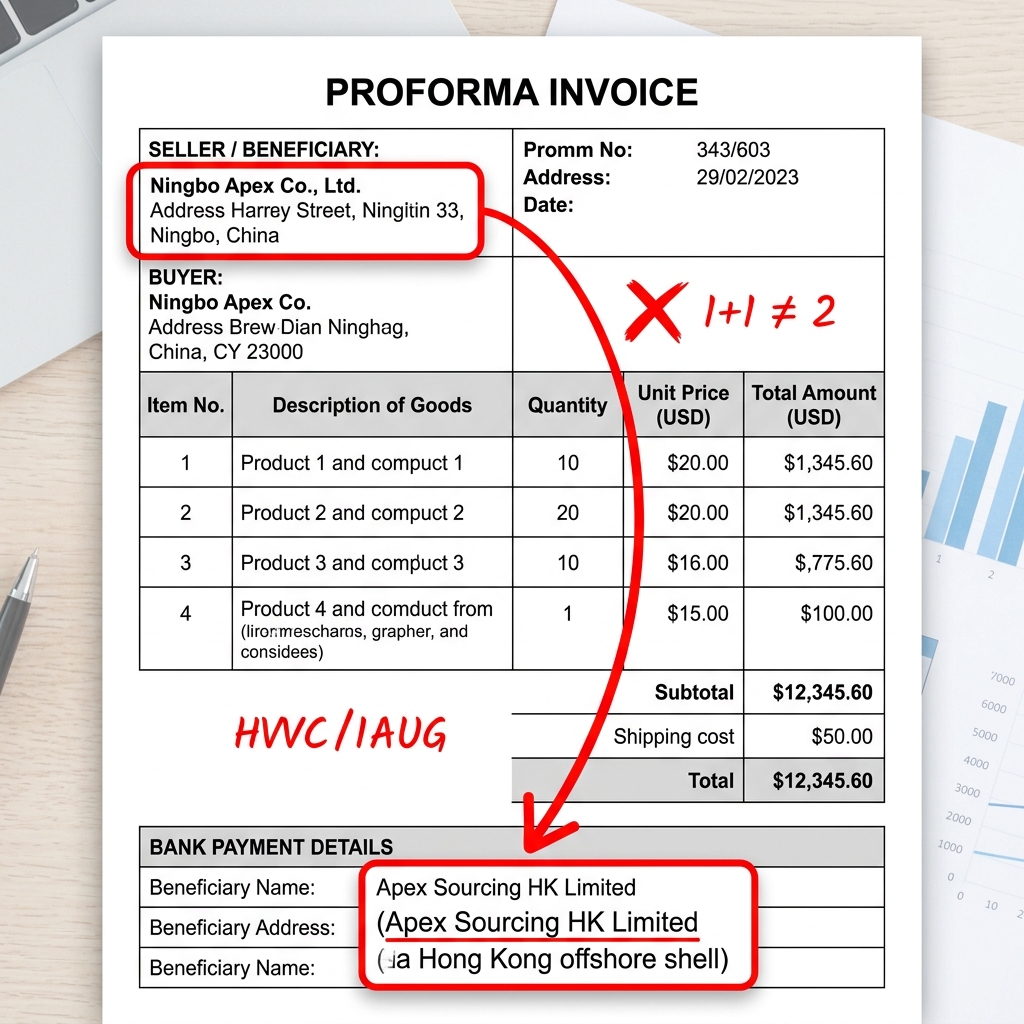
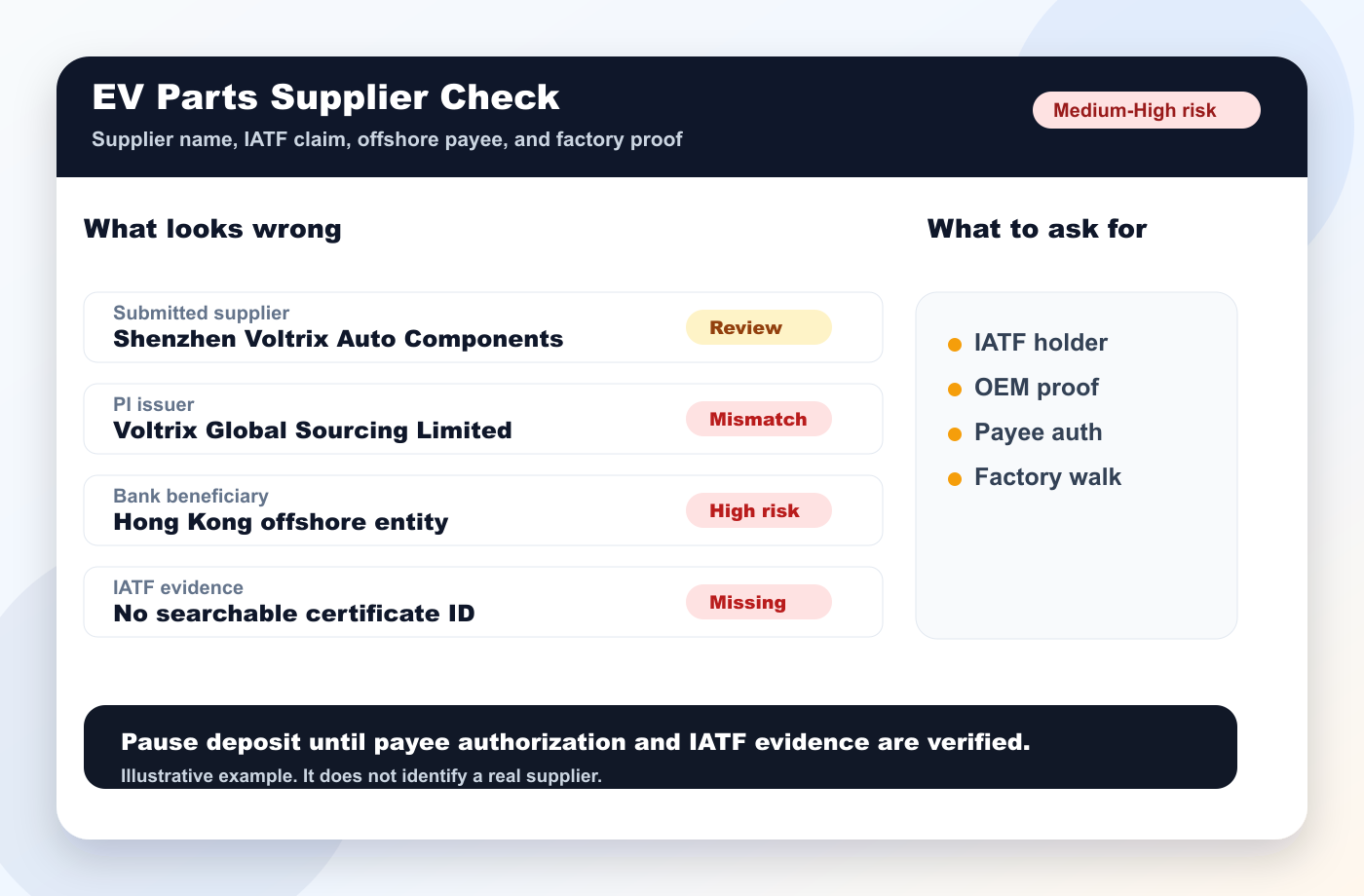
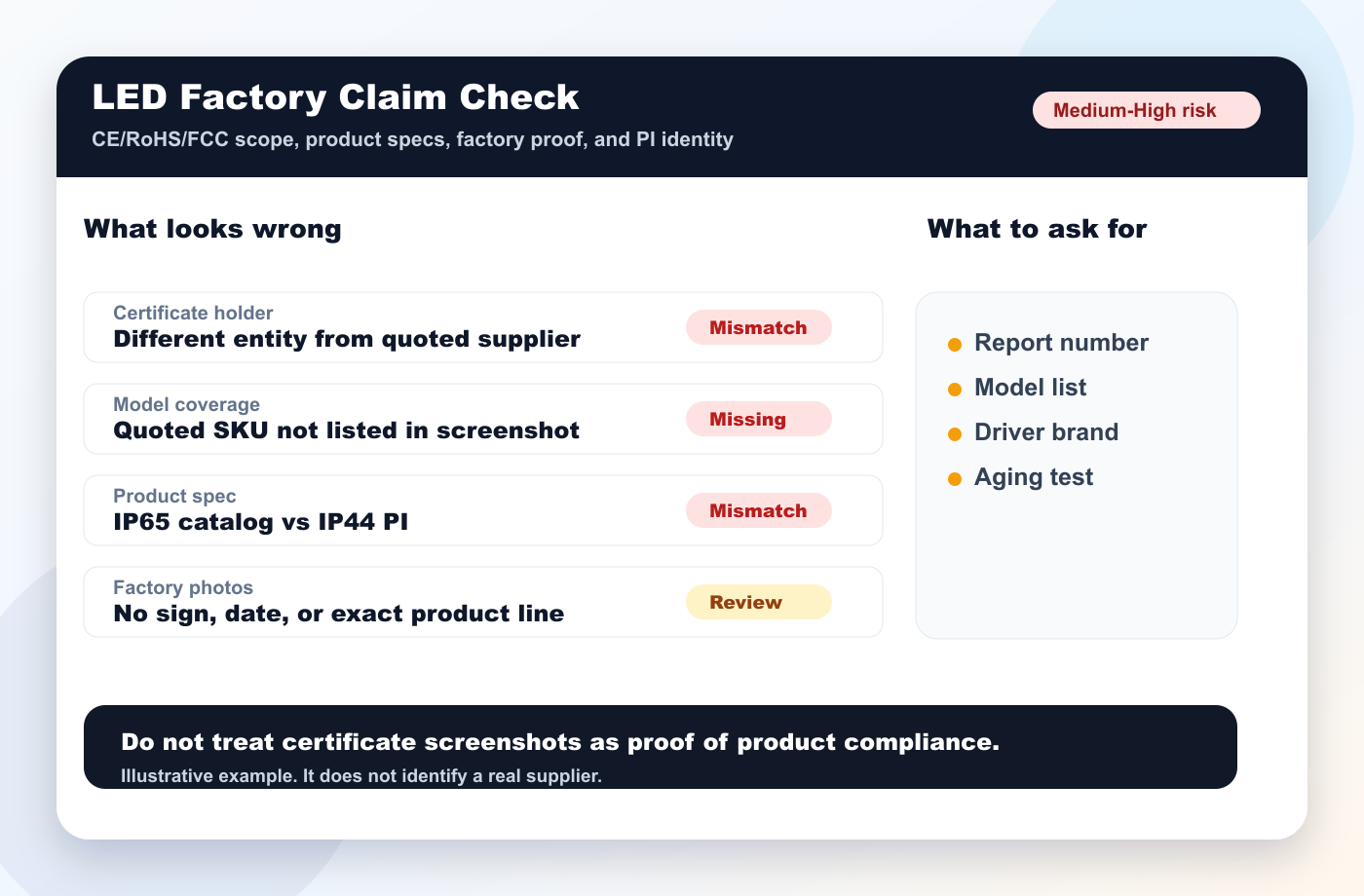
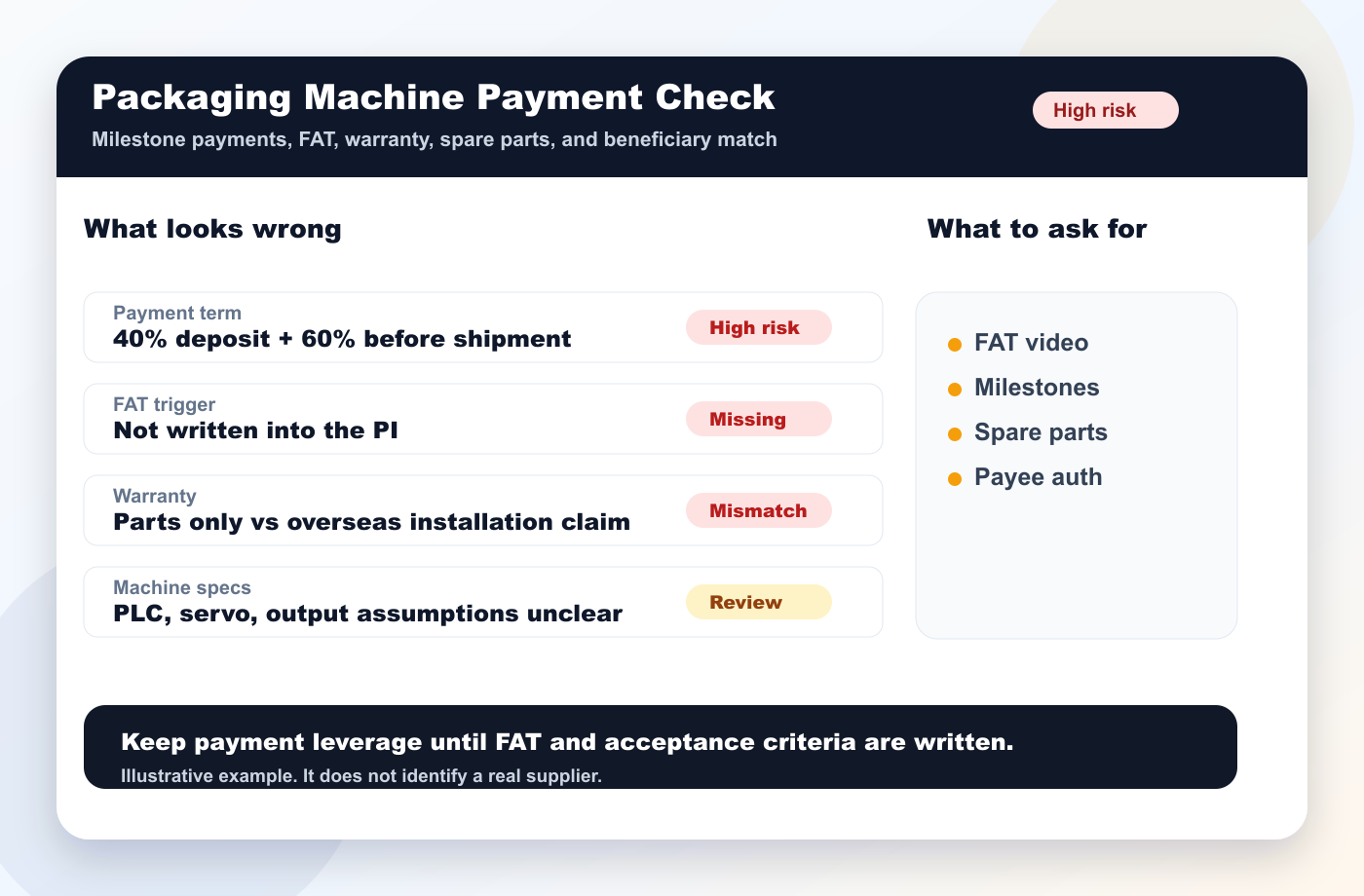
These examples show what to compare when a supplier asks for a deposit: the company name, PI issuer, bank account, certificate holder, factory proof, and the exact questions to send back before paying.
They are written around the moment a buyer is about to send money. Each example shows what looks inconsistent, why it matters, and what to ask the supplier before paying.
Start where the risk begins
Each example begins when the supplier is asking the buyer to continue, send a deposit, or accept a risky term.
Check the names
See whether the supplier name, legal company, website, PI issuer, and bank beneficiary point to the same party.
Look at the right proof
Auto parts, LED, and machinery suppliers create different risks, so each example focuses on the proof buyers actually need.
Know what to ask next
Each example ends with plain next steps: ask for authorization, verify certificates, change payment terms, or pause the wire.
Common questions before payment
Are these reports real supplier investigations?
Some examples are realistic but simulated. They are based on common buyer situations and do not describe real suppliers.
Why use case reports instead of generic guides?
Buyers usually need help at one specific moment: a supplier is asking for money, and the buyer needs to know what to check before paying.
Can a sample report prove a supplier is safe?
No. It cannot guarantee a supplier is safe. It shows what looks inconsistent, what is missing, and what the buyer should ask for before payment.
Which report should I choose for my supplier?
Use a free entity scan when you just found a supplier. Use PI & Payment Risk Review when you have a PI, payee name, or bank instruction.